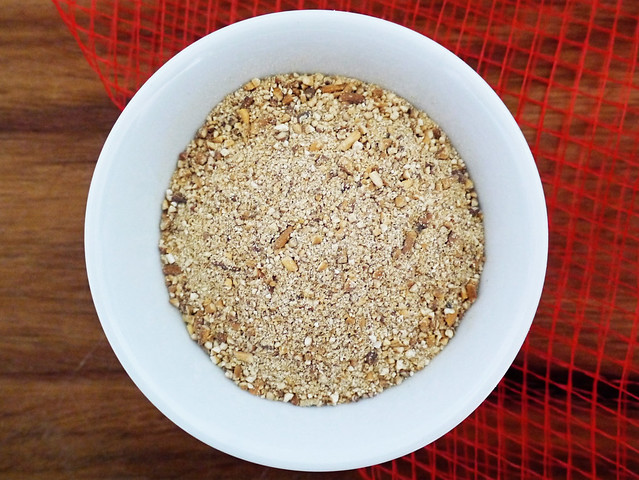
Khao khua – freshly made and ready to be used in “larb” and other classic Lao recipes.
[dropcap]Khao[/dropcap] khua is Lao ground roasted glutinous rice powder, and is an indispensable ingredient in Lao cooking. It’s traditionally used in the final stages when preparing “larb”, Laos’s national dish, where it’s sprinkled on and mixed into the salad, imparting a delicious and distinctive toasty, nutty, smokey, aromatic and sweet flavour and aroma to the dish. It also adds a wonderful colour and grainy texture to the dish making it even more delicious to eat.
Among other Lao dishes, khao khua is also used to make a popular spicy Lao dipping sauce (“jeow”) for sour fruits, where it is mixed with other ingredients such as chilies, garlic, shallots, sugar, salt, fish sauce, padaek, etc – creating an intense and powerful sweet/spicy/savoury sauce that complements the sour fruits very well.
Back at home, if my memory serves me correctly, my mum and sister made khao khua by simply dry roasting/frying raw/uncooked white glutinous rice (Oryza sativa var. glutinosa) grains (usually outdoors) in a wok/frying pan until it turned golden brown, and then grinding the grains with a coffee grinder (or with a mortar and pestle – the traditional way) until it became a fine powder.
I recently discovered a recipe for khao khua by Luke Nguyen on SBS food (where you’ll also find other wonderful Lao and Southeast Asian recipes) where he fries the rice grains with kaffir lime leaves and chopped lemon grass which consequently impart a lovely aromatic fragrance to the dry roasted rice. 1
I was not aware of this method and thought it sounded wonderful and simply had to try it.

Khao khua can be stored in an airtight container/jar in a cool kitchen cupboard or fridge for several months.
So, in preparation for a larb inspired recipe that I’m working on, I made khao khua using kaffir lime leaves and lemon grass as aromatics, as demonstrated by Luke Nguyen, and it worked a treat! The scent of the kaffir leaves and lemon grass are subtle in the final ground rice powder but is obvious enough to make the method worthwhile.
In the following recipe, I used 3 cups of raw/uncooked glutinous rice, but you can use and make as much as you like, and store the finished product in an airtight container/jar in a cool kitchen cupboard or fridge for several months.
The kaffir lime leaves and lemon grass are optional, and if you’re feeling adventurous – instead of kaffir lime leaves and lemon grass, perhaps you might want to try other aromatics such as galangal, ginger, star anise, cinnamon sticks and chilies? I personally haven’t tried these ingredients to make khao khua before but I can only imagine how delicious/wonderful they would make the ground rice grains smell/taste.
Also, if you do not have raw white glutinous rice at hand, perhaps you want to experiment with jasmine or other rice grains instead? Again, I’ve only used glutinous rice before, but I trust the results will be quite similar? If you do use non-glutinous rice grains to make khao khua, please let me know how it turns out.
And if possible, I advice to dry roast/fry the rice grains outdoors. If cooking it indoors, be sure to have your kitchen well ventilated/windows open because the process can cause a lot of smoky smell. Also, when pounding/grinding the rice grains, be careful to not deliberately inhale the rice dust, especially if it’s been infused with aromatics, because it can cause sneezing.
Besides that, have fun making khao khua and stay tuned for a special Lao larb inspired recipe coming soon!
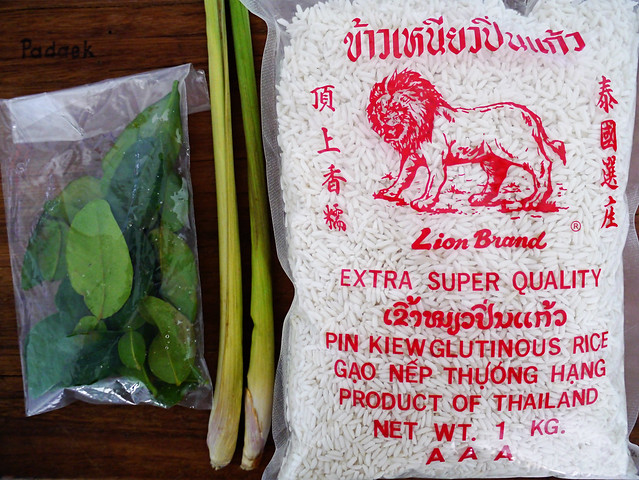
To make khao khua, you’ll need raw white glutinous rice grains. Optional ingredients include kaffir lime leaves and lemon grass.

First, bring a wok or frying pan to medium-high heat. Add the glutinous rice grains, kaffir lime leaves and chopped lemongrass to the wok/pan and dry roast/fry.
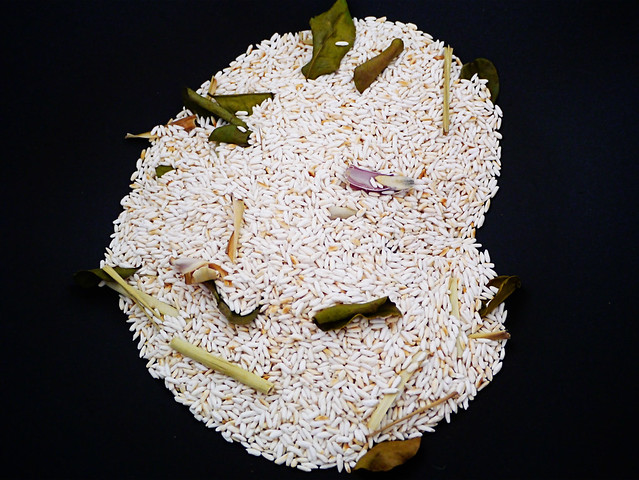
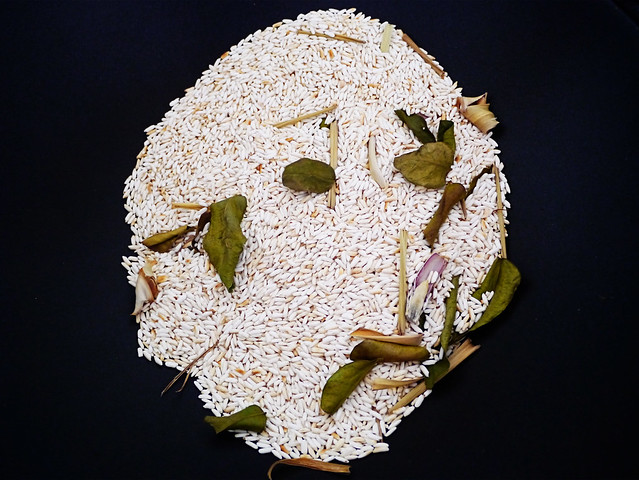
While dry roasting the rice and aromatics, I found great pleasure in creating some random khao khua inspired abstract portraits – some of which spontaneously appeared from each turn/stirring of the rice mix! This chap looks like a very distinguished gentleman!
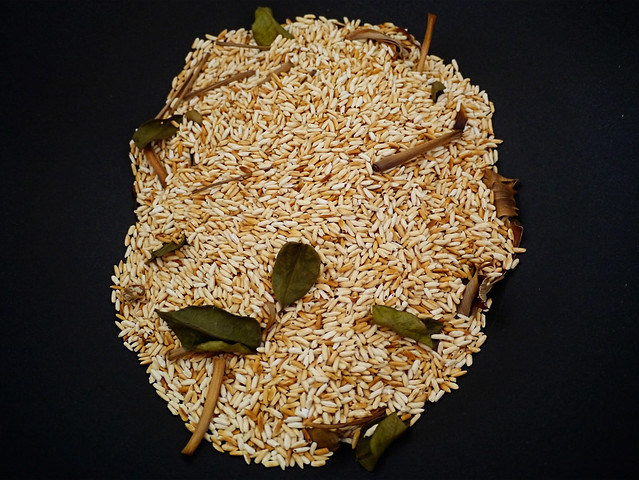
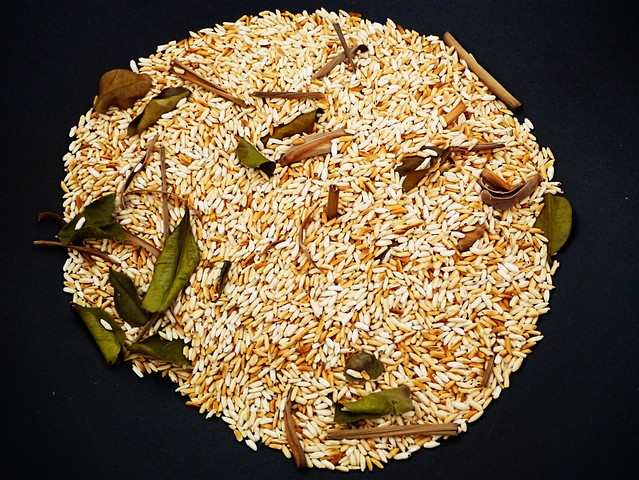
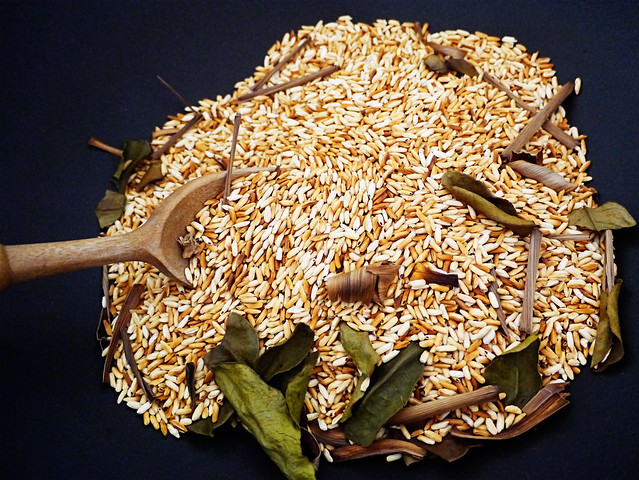
Continually stir the rice grains and aromatics until the rice grains turn to a golden brown colour. Do not leave the grains unattended to ensure that they don’t burn.
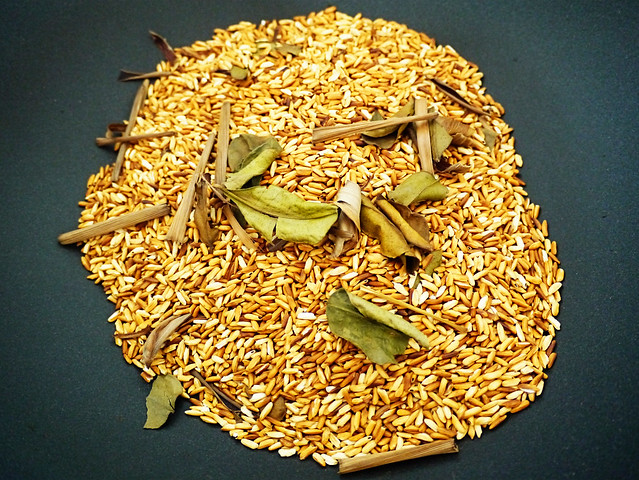
Not sure what episode the camera was having here but the photo/rice grains turned out all vogue/glossed up.
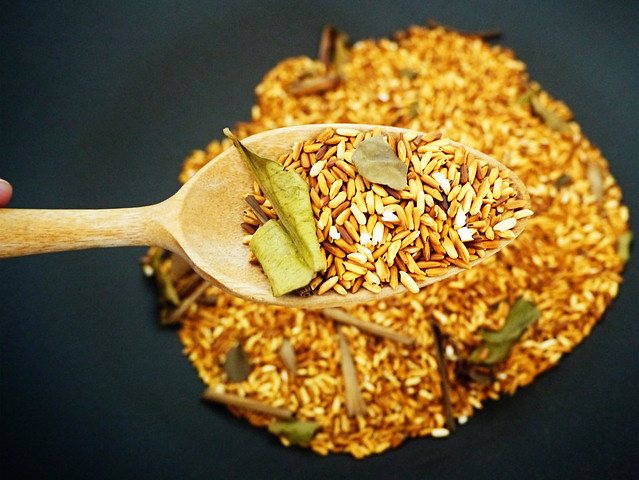
When the rice grains are golden brown, turn off the heat and allow the grains to cool down. Notice how some of the grains have popped open like a popcorn?
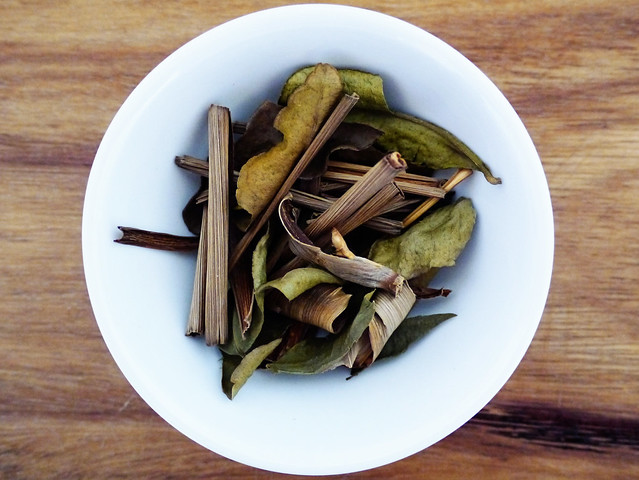
Remove the kaffir lime leaves and lemongrass pieces from the rice grains (optional). By the time the rice grains turned golden brown, the aromatics had turned crispy/flaky. I love their smell and pairing with the rice grains so much that I left them in with the grains and continued to pound them together to make the khao khua mix.
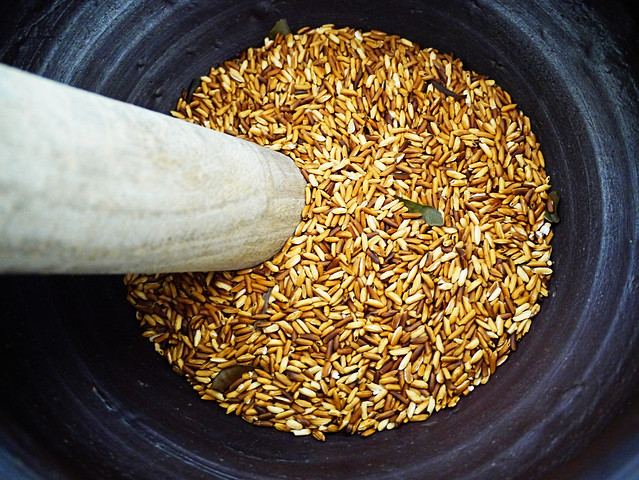
Transfer the cooled rice grains (and aromatics) into a mortar and pound the mixture until it is a fine powder.
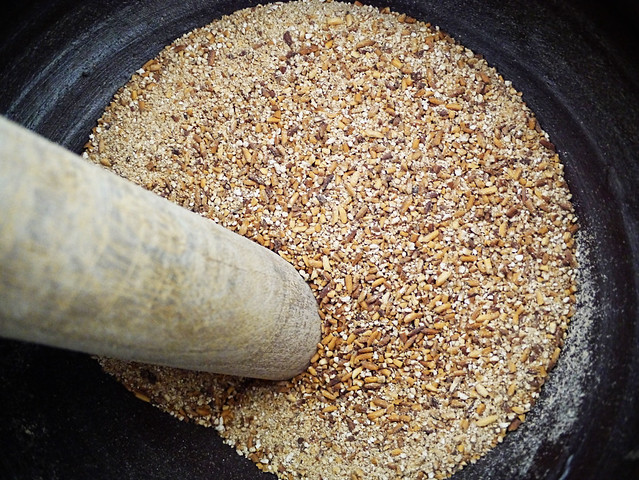
Continue to pound – and pound – and pound
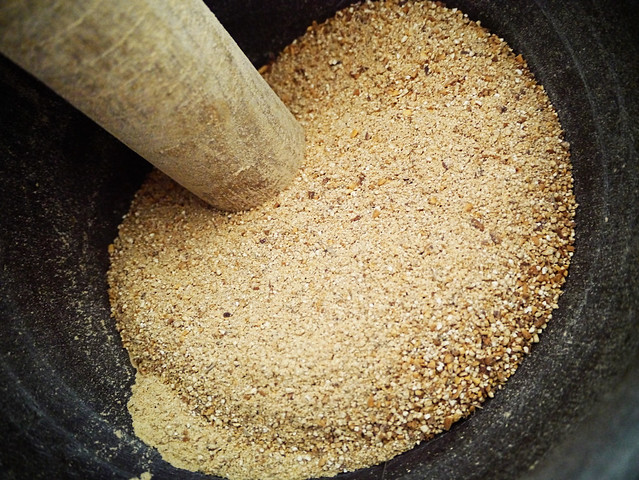
This process can also be done using a coffee/spice grinder. It is ok to have some large pieces of rice grains in the finished khao khua. Note to self: Must buy a coffee/spice grinder for this job!
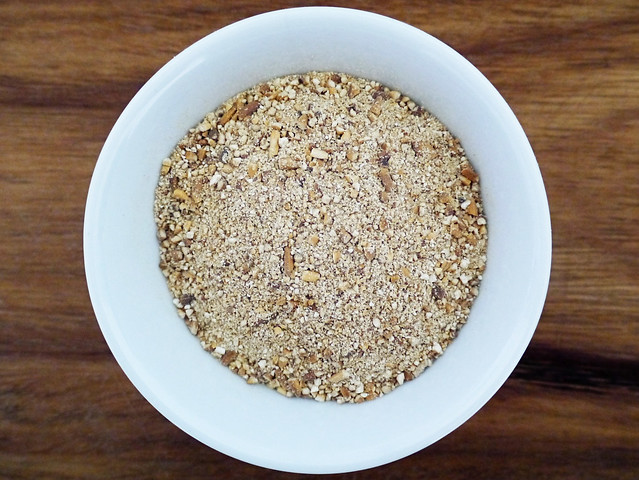
Once finely pounded/ground, transfer the khao khua into an airtight storage jar. It can keep in a cool kitchen cupboard or fridge for several months. Use khao khua in the preparation of Lao “larb”, “jeow” and other classic Lao recipes. Enjoy – phew!
Note: The above khao khua could have been pounded more to a finer consistency but my arms and patience were giving in – best to do small batches at a time.
- 3 cups of raw white glutinous rice
- 10 kaffir lime leaves
- 1 lemongrass (roughly chopped)
- Wash the kaffir lime leaves. Wash, crush/bruise and roughly chop the lemongrass into 3 cm pieces.
- Bring a wok or frying pan to medium-high heat. Add the glutinous rice grains, kaffir lime leaves and chopped lemongrass to the wok/pan and dry roast/fry.
- Continually stir the rice grains and aromatics until the rice grains turn to a golden brown colour. Do not leave the grains unattended to ensure that they don't burn.
- When the rice grains are golden brown, turn off the heat and allow the grains to cool down.
- Remove the kaffir lime leaves and lemongrass pieces from the rice grains (optional).
- Transfer the cooled rice grains (and aromatics) into a mortar and pound the mixture until it is a fine powder. This process can also be done by using a coffee grinder. It is ok to have some large pieces of rice grains in the final mixture.
- Once finely pounded/ground, transfer the khao khua into an airtight container/storage jar. It can keep in a cool kitchen cupboard or fridge for several months.
- Used khao khua in the preparation of Lao "larb", "jeow" and other classic Lao recipes. Enjoy!
Did you know?
- In Laos, per-capita sticky rice consumption is the highest on Earth at more than 345 pounds (156.5 kg) per year. 2
Notes:
- Reference: http://www.sbs.com.au. By the way, I think SBS Food is awesome! ↩
- Reference: http://www.smithsonianmag.com. ↩
Such an interesting post! Truly interesting, Padaek! I have shared this : )
Thank you very much for your visit and kind comment Liz! You’ve made my day. :)
I have roasted rice for larb before, but not with all those wonderful aromatics. This is definitely the way to do it, thanks so much for sharing. Will have to roast some up for the pantry.
Hi Sara! Thank you for your visit and comment. The aromatics definitely add a lovely dimension to the khao khua and after dry roasting, they become brittle/flaky and easy to ground/incorporate into the rice mix. Making small amounts of khao khua is easy and ensures freshness but if you’re using a spice/coffee grinder, you can make a lot and easily store the rest in the fridge or pantry for months. :)
That’s great that you made your kaho khua from scratch yourself! :D
Thanks Lorraine! Love cooking/preparing ingredients from scratch – a lot of fun (sometimes hard work) but tastes so much better. Also great to be adventurous and experiment with the recipes too. :)
I’ve just discovered your lovely blog. Fascinating recipes – especially this one!
Thank you lambsearsandhoney for your visit and comment. The khao khua is an essential ingredient in larb – please stay tuned for a recipe coming soon. Have a great day! :)
I never knew we had to use that rice (I’m Filipino and have a lot of lao, Cambodian friends) they never told me and I used regular Jasmin rice 😂😂🤦🏽. Now I found this recipe definitely going to try and use that kind.